How to Put Lights on a Christmas Tree: Tips for a Beautifully Lit Tree
Christmas lights can make the difference between a nicely decorated tree and one that instantly catches everyone's attention. But how should you put lights on a Christmas tree, how much lighting do you need, and when should you add the lights?
Should you start at the top or the bottom? How many metres of Christmas lights do you need for a 180 cm tree? Should the lights sit at the tips of the branches or deeper inside the tree?
Here are our tips for creating a beautifully lit Christmas tree with a warm, balanced glow from top to bottom.
How much Christmas lighting do you need for your tree?
This is one of the first questions to consider, yet many of us buy Christmas lights without really thinking about the size of the tree.
The length you need depends on both the height of your Christmas tree and the effect you want to achieve. A subtle glow will naturally require fewer lights than a bright, sparkling tree.
As a general guide, you can use the following:
Christmas tree height
120 to 150 cm
150 to 180 cm
180 to 210 cm
210 to 240 cm
Over 240 cm
Recommended length of lights
8 to 12 metres
12 to 18 metres
18 to 25 metres
25 to 35 metres
35 metres or more
These figures are only a guide. If you prefer a particularly bright Christmas tree, simply allow for a little more lighting.
It is usually better to have a string of lights that is slightly too long than one that is too short. Extra length can easily be distributed more closely, whereas running out of lights halfway around the tree is much harder to fix.
When should you put the lights on a Christmas tree?
Ideally, Christmas lights should go on the tree before baubles and other decorations.
A practical decorating order is:
- position the Christmas tree and arrange its branches;
- add the Christmas lights;
- add decorative garlands or ribbons;
- hang the baubles;
- finish with special ornaments and your tree topper.
If you have a real Christmas tree, give the branches a little time to settle naturally after bringing it inside and positioning it.
Once the tree has taken its final shape, it will be much easier to identify fuller and sparser areas and distribute your lights evenly.
How do you put lights on a Christmas tree?
Before you start, plug in your Christmas lights and make sure they are working correctly.
It sounds simple, but discovering that part of a string no longer works after carefully weaving several metres of cable through the branches is best avoided.
You should also consider where your nearest socket is before starting. This will help you avoid ending up with a beautifully decorated tree and a cable that cannot quite reach the power supply.
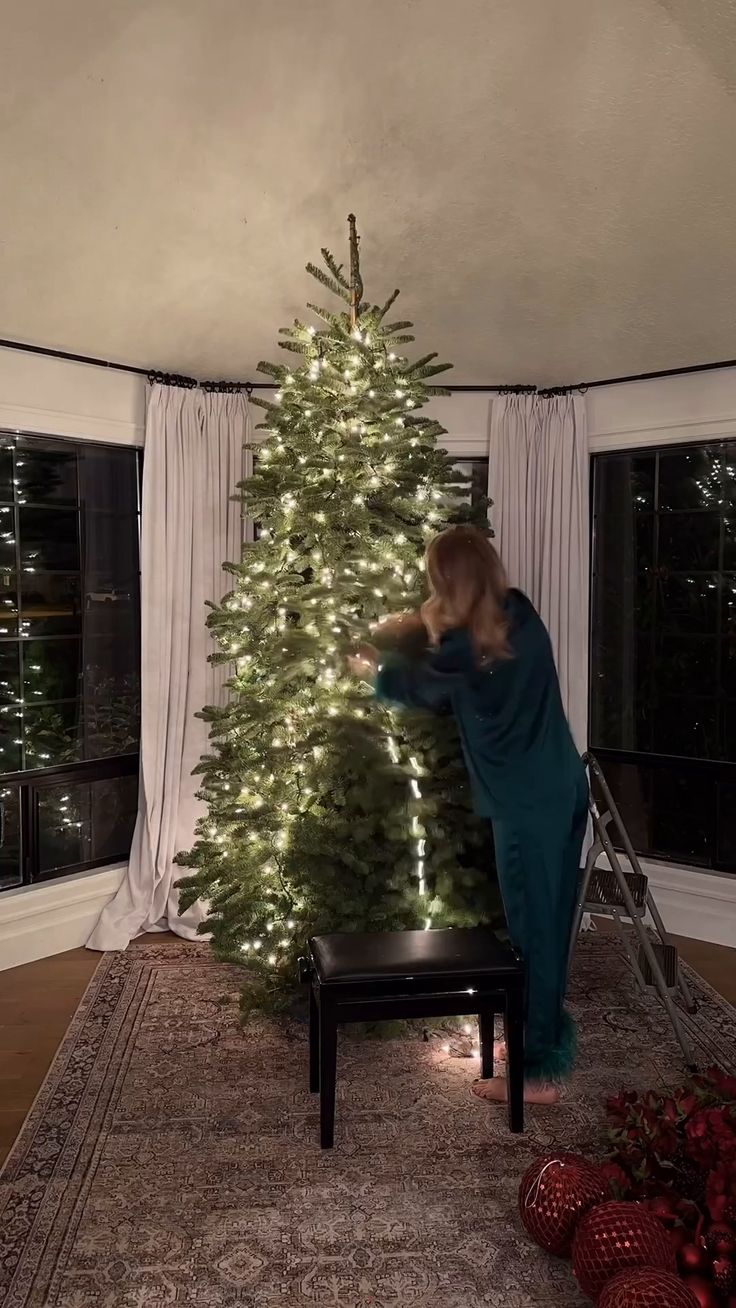
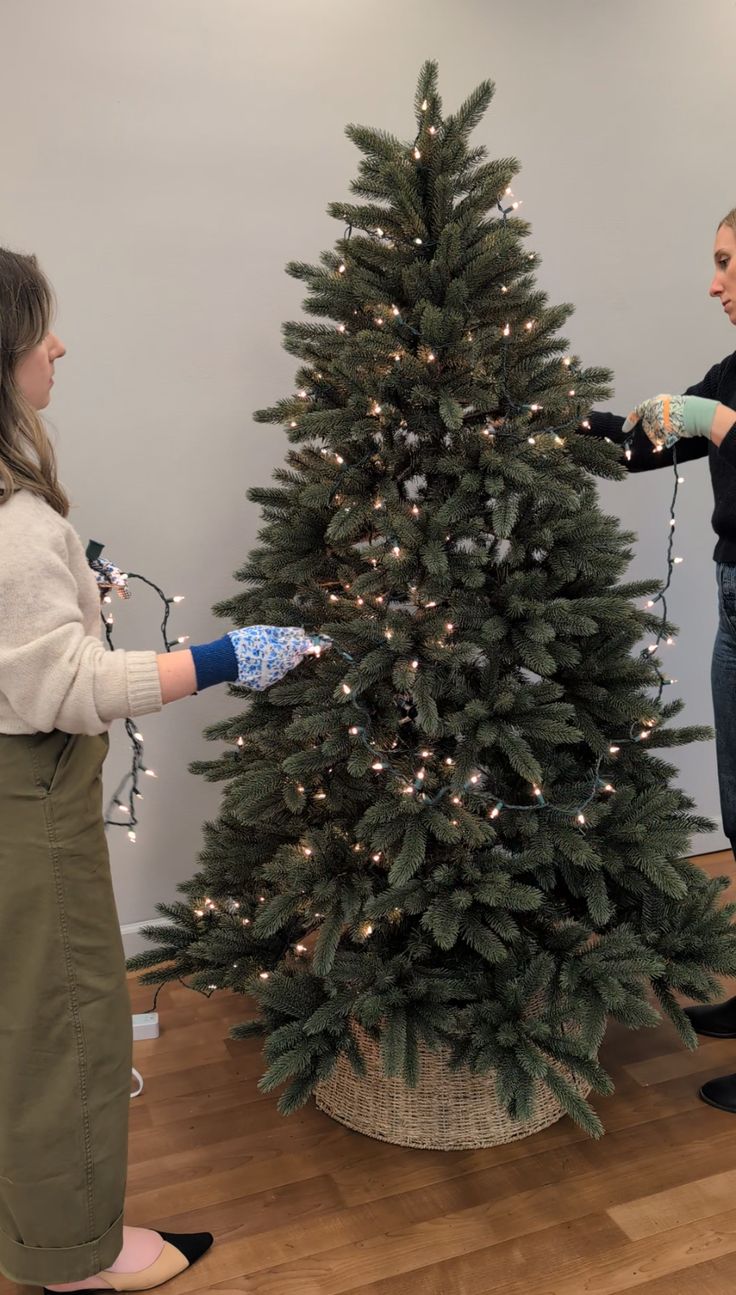
Create depth by placing lights throughout the tree
One of the easiest ways to give a Christmas tree more depth is to avoid placing every light at the very tips of the branches.
Position some sections of the lights closer to the trunk, before gradually bringing them towards the outside again.
Lights placed deeper inside the tree illuminate the branches from within, creating a warmer and fuller appearance.
When every light sits on the outermost branches, the overall effect can look much flatter.
Try alternating between:
inside the tree → middle of the branches → outer branches → back towards the inside.
It takes a little more time, but it can make a noticeable difference to the finished tree.
Should you put Christmas lights on from top to bottom or bottom to top?
There is no single rule that works for every tree.
For the traditional spiral method, it is often convenient to start near the bottom, particularly because this is usually closest to the power socket.
Gradually work your way around and up the tree, keeping a reasonably consistent distance between each level.
Another option is to hang your Christmas lights vertically. Run the lights down and back up the tree in long sections. This technique makes it easier to adjust individual areas and can also make removing the lights after Christmas simpler.
Whichever technique you use, one tip makes a huge difference: regularly take a few steps back and look at the whole tree.
A section that looks perfectly illuminated from close up may reveal an obvious dark patch when viewed from across the room.
Warm white or cool white Christmas lights?
The colour temperature of your Christmas lights has a major influence on the overall atmosphere.
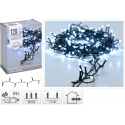
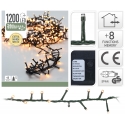
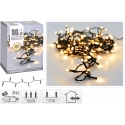
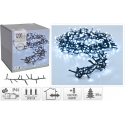
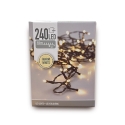
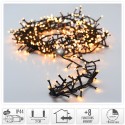
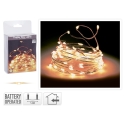
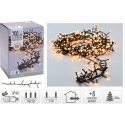
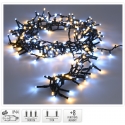
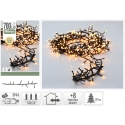
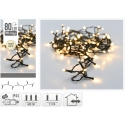
Warm white Christmas lights create a soft, slightly golden glow. They work particularly well with traditional, natural and elegant Christmas decorations and pair beautifully with red, gold, champagne and wooden ornaments.
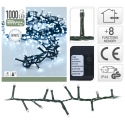
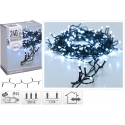
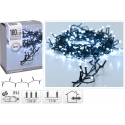
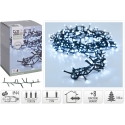
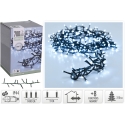
Cool white Christmas lights create a brighter white light, sometimes with a subtle bluish tone. They can work particularly well with contemporary Christmas decorations and winter-inspired colour schemes featuring white and silver.
For a more playful and festive look, multicoloured Christmas lights are another option.
There is no universally right or wrong choice. The key is to choose lighting that complements the rest of your Christmas decorations.
How can you tell if your Christmas lights are evenly distributed?
Once your lights are in place, switch them on and, if possible, dim the other lights in the room.
Then look at your Christmas tree from a few metres away.
Pay particular attention to:
- noticeably dark areas;
- sections where too many lights are concentrated together;
- visible cables running between branches.
Move a few lights if necessary.
There is no need to aim for perfect symmetry. A real Christmas tree naturally has branches of different sizes and shapes, and a slightly organic distribution of lights can actually look warmer and more natural.
Can you use several strings of lights on one Christmas tree?
Absolutely. For larger Christmas trees, using several strings can actually make decorating easier.
Multiple strings allow you to work on different sections of the tree independently and make adjustments without disturbing the entire arrangement.
Always follow the manufacturer's safety instructions and avoid overloading sockets, extension leads or connections.
For a particularly large Christmas tree, you could light the lower, middle and upper sections separately. This makes it easier to adjust the brightness in each area.
What about decorative garlands and ribbons?
Beaded garlands, ribbons and other decorative garlands are generally added after the lights but before the baubles.
Again, try not to simply lay them across the tips of the branches.
Allowing a garland to disappear slightly into the foliage before bringing it back towards the front can help it follow the natural shape of the Christmas tree.
Wide ribbons can also be arranged vertically or in large flowing sections to emphasise the height of the tree.
Common mistakes when adding Christmas lights
A few small details can have a surprisingly big impact on the finished result.
Avoid pulling the string of lights too tightly between the branches. The cable should follow the natural shape and volume of the tree.
Try not to concentrate all your lights on the front either. Even if your Christmas tree is positioned against a wall, adding some illumination to the sides will create a greater sense of depth.
Most importantly, don't wait until every bauble is hanging on the tree before deciding whether you have enough lights.
Check the lighting before moving on to the rest of your decorations.
A simple trick for a more elegant Christmas tree
Once all the lights are in place, resist the temptation to start hanging baubles immediately.
Switch on the lights, take a few steps back and look for the natural spaces between the branches.
You can then use your larger baubles and statement ornaments to balance these areas rather than distributing decorations randomly.
This way, the lighting becomes the foundation for the entire Christmas tree design.
A beautiful Christmas tree starts before the lights go on
Even the most beautiful Christmas lights will struggle to shine if the tree itself has not been positioned and shaped properly.
Before decorating, take the time to choose a Christmas tree that suits the size of your room, position it securely and give its branches enough space to settle naturally.
A full real Christmas tree combined with lights distributed both inside and towards the outer branches creates the depth and warm festive glow that makes a Christmas tree feel truly special.
Once the lights are in place, all that's left is the best part: bringing out the baubles, choosing your favourite decorations and watching your Christmas tree gradually come to life.
Share this content